On the election
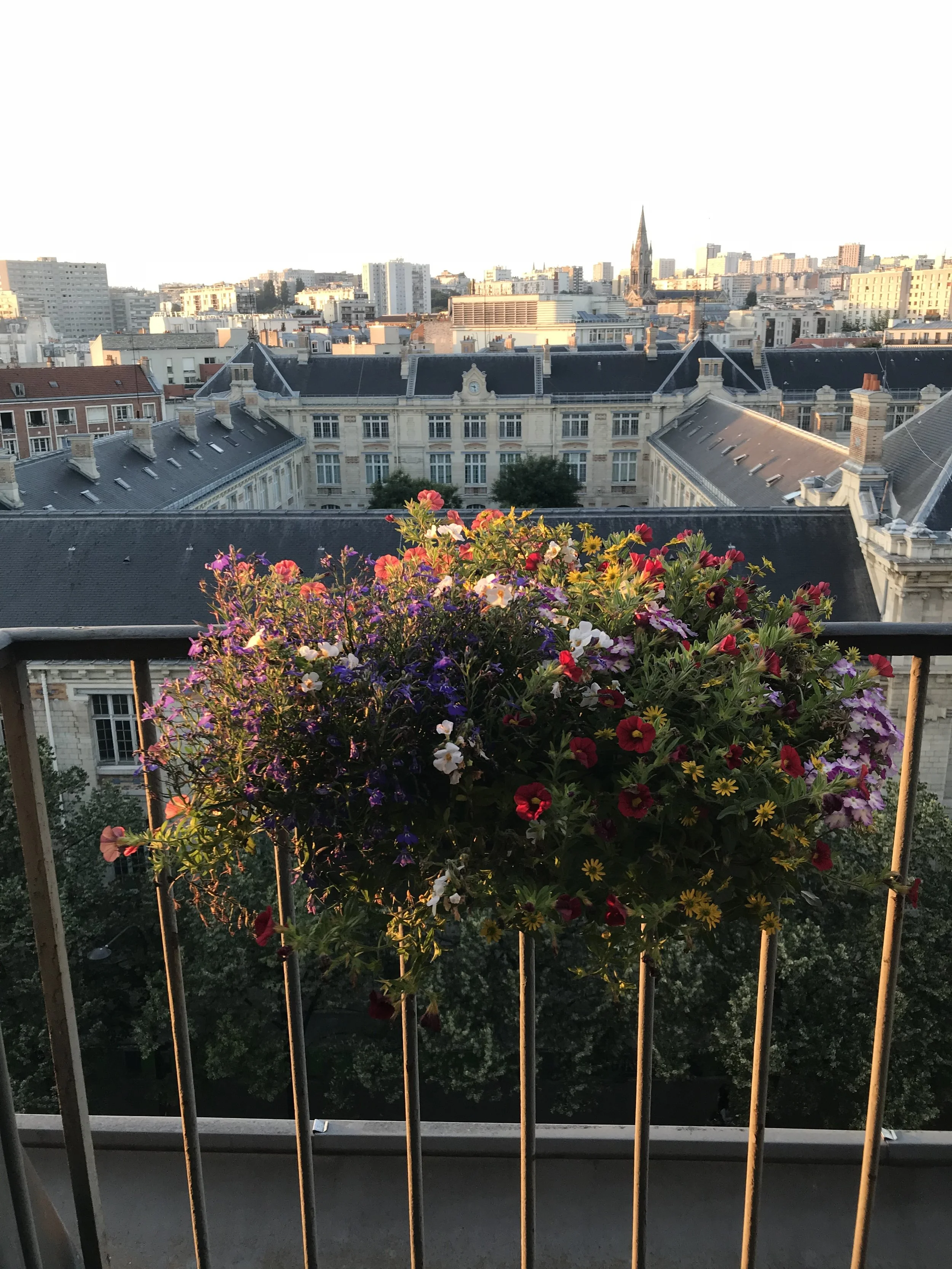
The famous song about living beneath the Parisian sky is singing in my head as I test a small chambre de bonne with the option to buy it. I long to have a room of my own in this city where I used to live. Not that I can afford it. I’m currently living on my MasterCard. The room has a small balcony, and not much else. My friend Nicolas calls it my big Parisian bed and he’s not wrong. When the couch is out there’s not much floor space left, only enough to stand and use the small sink. I call it a studio, but I can’t write here. The city’s bistros will have to do.
I am here to write, but begin each morning by scrolling. So many things I know – things I never knew I needed to know. I see what my friend drank on her date yesterday, what a colleague thinks about a recent verdict in a court case, and what colour the mother of eight decided to dress all her kids in for this week’s group photo. How can one have eight kids? I don’t get it, and the fact that I’m even thinking about this stranger’s life is weirder still.
I wonder, especially when my daughter watches stories on TikTok for two hours at a stretch, what happens with all this information. Where does it go? Will it eat away the knowledge that we already have? In other words, am I getting stupider? She grows up thinking it’s normal to share what one had for breakfast with the whole world, as if it didn’t happen unless someone knows. It reminds me of a comedy sketch that made fun of this. The comedian called people up to tell them what he was eating for dinner; didn’t let strangers pass him in the supermarket before they’d heard about the book he was reading; interrupted people’s conversations in restaurants to cite a favourite quote.
Only a few weeks ago the French president was photographed in a hoodie with three-day stubble instead of the tight suit and clean shave we’re used to. The former American reality-tv president is responsible for this hunger for photo ops. Now, instead of continuing his mission to annoy all the unvaccinated people, Macron can be the warrior, the comforting father of the country. The day after he closed the country for the third time in April last year, saying no- one could drink alcohol in the parks, all of Paris seemed to decide to have their lunch outside with many bottles of wine. It is as if they enjoy being against; it is as if they say no just to say no.
I arrange the bed back into a couch. I want to start writing right away. Maybe it will be something about the contrast between my intense scrolling on social media to follow the lives of strangers, and how indifferent one becomes to seeing people suffering everywhere in Paris. But just opening my Mac makes me nauseous, and I persuade myself I need to read up a little before diving further into French politics. I sprint down the seven floors to find the nearest bookshop. I think about how, during both lockdowns in France, the bookshops stayed open along with the supermarkets and pharmacies. It seemed the French government considered maintaining access to novels and stories to be an essential service during the grand misère.
I hear animated voices before I open the door. Two women and a man are standing by the entrance. I’m not sure if they’re arriving or leaving. I whisper pardon and squeeze past them. ‘It feels like ripping my heart out,’ one of the women says. ‘It’s created a forever stain on my soul,’ she says. It’s all a bit dramatic for a Nordic person. But maybe this is why I feel safe in this country – everything is said out loud, everyone offers their inner feelings immediately. You never get any of the stingrays of passive aggression hidden in the pleasantries exchanged back home.
I stand as close to them as I can, pretending to be interested in the new Houellebecq novel I’ve picked up. One of the women lost her daughter in the attacks. The young woman was out for an apéro at La Belle Équipe. The man is retelling the testimony of the terrorist who failed to detonate his explosive vest. He told the court he’d learned about the intended targets only two days before. He went into a café in the 18th arrondissement, looked around and decided not to do it. ‘He claimed he didn’t kill anyone, didn't even cause a scratch,’ the man says. This is too much for the ladies – sisters perhaps – to take. My curiosity is forcing me closer to the group. The trial is still ongoing, expected to last nine months. The memories are close.
I remember the day of the attacks. And the day after it, I left my daughter in our studio and went out for supplies of food, wine and candy at the nearest supermarket. We feared more terror. I sneaked as close to the wall as I could. No one knew what would happen next. As I remember it, I was the only one in the street.
‘This is not your grief,’ the mother says to the man. ‘Why are you so occupied by this? So drawn to a drama you’re not involved in? It isn’t normal.’ He protests. ‘This happened to all of us, to France. It was the worst attack we’ve had in this country in peacetime.’ The woman grows angrier. ‘I know,’ she says. ‘Don’t you think I don’t know? I think about it every single day. I don’t need your busy nose in it!‘ She’s done, both with the man and the shop, and makes a quick exit, with the other woman right behind her. The bookshop exhales.
I try not to make anything of the tired ça va from the waiter at my favourite bistro when I ask her how she’s doing. She’s just living her normal life, while I’m here trying to recreate my previous one. Everyone but me knows this is a lost mission. I always attach myself so fiercely to places I’ve left, forgetting that one can never go back. As Oscar Wilde said, sentimentality is merely the bank holiday of cynicism.
I even want our old studio back, the one with the city’s smallest balconies. And the two mezzanines, one for my daughter and one for me, hers full of the toys she’s done playing with. One of the first things we did on moving in was to buy two flower boxes for the balconies at the florist nearby. He said he had the perfect ones for us, and he was right. They were gorgeous, overflowing with lots of different plants. I used to sit with a glass of wine, the balcony doors wide open, feet on a stool, just admiring the colours of the clusters in the pink light of sunset. I’ve kept too many images, taken from different angles, of the boxes on my phone, which I still look at from time to time.
A derelict man keeps eyeing me, like we know each other. I’ve avoided all form of eye contact ever since I entered. I pick up my phone again. The screen is still dark. What did we do before, when we couldn’t be reached all the time? I’m like the character in Woody Allen’s Play It Again Sam. In this pre-mobile phone era, his workaholic friend calls his office whenever he’s in a new place to tell them what number he can be reached on. Except I never get a call.
No one is looking for me, except the man, who is now staggering towards me, arms flailing, words incoherent. ‘You’ve done something to me that I’ll never forget,’ he says, although he’s already confused about what it was. He’s towering over me, his eyes glazed over, pointing a shivering finger. ‘You ... you ... you ...’ But he can’t finish his sentence, or remember the wrongdoing. Many people in the café are watching. In one way, he’s a welcome analogue break in my digital morning. He’s real, right here; if I reach out I can touch him. But I don’t. I just calmly say I’m sorry and that he must be mistaking me for someone else. He looks even more confused by this. The energy that got him up from his table has vanished. He says ‘You ...’ one more time, then moves past me and out the door. My phone screen is still dark.
I take a stroll along the Seine with Nicolas, who’s convinced Mélenchon will be too old next time. ‘Look at Biden,’ I suggest, but he doesn’t seem convinced. He still hasn’t got over Le Pen’s speech about how the coming election is about a choice of which society to live in. ‘She said it’s a choice for civilisation! I can’t believe she went there,’ he scoffs. ‘And people seem to believe her, which is totally unsupportable.’ He’d asked for only the envelope with Macron’s name on, but was told to bring both into the booth. It’s apparently illegal to show publicly how one votes. He said he held the envelope with Le Pen’s name far away from him by the corner, as if it were contagious.
We’re walking the tourist route; it’s like being in a large film still. It’s so different here from the rest of the city. Garbage is miraculously swept away, as are the beggars, the realness of the city. ‘No tourist sees the true Paris,’ Nicolas says as we walk over the bridge from Île Saint Louis, passing an accordionist destroying La Vie en Rose. ‘We’re just keeping up the banal idea of who we are, since we can’t afford to not have tourists here.’
He’s never understood the fascination of Eiffel’s structure – ‘it is just a tower’ – nor Sacré Cœur – ‘basically just a grand symbol of the Catholic Church and the establishment.’ We’ve even had an argument about the Buttes-Chaumont park. He doesn’t like the reminder of Napoleon. Passing Notre Dame he has, unsurprisingly, more critique to deliver. ‘It breaks my heart how easy it was to fund the restoration while the government are still struggling to help the homeless people.’ His mood lifts a little when we get closer to the Bourse de Commerce. ‘You must see what one of the billionaires has done to the old 18th-century corn exchange building.’
We look in awe at the big rotunda, then make our way to the top floor to see the sculpture exhibition on display. The relief Girl on Pony makes me think about one of the characters in the new French TV series Drôle: a well-heeled young woman trying to be a stand-up comedian, making jokes about the so-called ‘sexual education’ she got from horse-back riding in her youth. The other characters include a French-Algerian man from the suburbs, a black woman, and a son of Vietnamese immigrants. ‘It’s obviously a reaction to criticism of the writer’s last TV series being too white,’ I say. Nicolas agrees. ‘Everyone’s trying to catch up in this fluid time; trying to understand how the other part of Paris lives, where the youth is, where the actual life is,’ he says. I nod. ‘But trying to show the real France in the space of six episodes doesn’t flatten out what should have been fixed long ago,’ he complains. ‘Nothing will erase the unbalance,’ I suggest. ‘But shouldn’t we continue to work towards it?’ Nicolas isn’t convinced.
The realtor has emailed me several times to ask how I’m finding my small dollhouse, but I haven’t replied. It might be the worst idea ever. Seven square meters. Everyone else I know owns inhabitable apartments, living the adult life. I watch the results on my phone, sitting on a small stool on the tiny balcony with a glass of wine and the rest of the cheese Nicolas brought last time. Le Pen will make the choice for me. I won’t buy this small studio if France has a Madame President for the next five years. My internet isn’t the best, so I can hear cheering from another balcony before the result comes up on my phone. Macron.